Chapter Three: Building Access
"Knowledge is powerful. Access is life-changing."
As the vision for Breast Imaging Matters became clearer, I realized something important.
Identifying women at increased risk wasn't enough.
If we were going to tell a woman she may be at increased risk for breast cancer, we also had a responsibility to help her understand what that meant and what options were available to her.
That's when something shifted in my thinking.
I stopped thinking about awareness.
I started thinking about access.
Awareness matters.
Education matters.
Advocacy matters.
But I didn't want Breast Imaging Matters to become another organization that simply talked about the problem.
I wanted us to help build the solution.
Women who have already been identified as high risk are often connected with incredible healthcare teams. They may have access to high-risk breast clinics, genetic counselors, breast surgeons, medical oncologists, and specialized screening programs.
Those programs save lives.
But they only help the women who have already been identified.
My question became...
What about the women who haven't?
What about the woman who doesn't know she qualifies for annual breast MRI?
What about the woman whose family history has never been entered into a validated breast cancer risk model?
What about the woman living in a rural Oklahoma community where high-risk clinics and genetic counselors may be hours away?
What about the busy mom in her thirties?
She's not spending her Saturday walking through health fairs.
She's working.
She's raising children.
She's building a career.
She's taking care of everyone else.
If we wanted to reach her, we had to stop expecting her to come to us.
We needed to meet her where she already is.
At workplaces.
At community events.
At churches.
At schools.
At local businesses.
On social media.
Wherever women are.
I don't want women to have to go looking for Breast Imaging Matters.
I want Breast Imaging Matters to find them.
Imagine seeing a simple QR code that says:
Know Your Breast Cancer Risk.
One scan.
One validated risk assessment.
One opportunity to better understand your health.
No complicated process.
No wondering where to begin.
Just one simple first step.
That became the vision.
Because I believe women have a right to understand their own health.
They have a right to know their breast cancer risk.
They have a right to ask questions.
They have a right to understand their options.
And when appropriate, they should have access to genetic counseling and the opportunity to pursue genetic testing—not because someone told them they had to, but because they deserve the information needed to make informed decisions about their own health.
Once that vision became clear, I knew Breast Imaging Matters couldn't build it alone.
I began reaching out to organizations across the country.
I wasn't looking for sponsors.
I was looking for partners.
Partners who believed access shouldn't depend on where a woman lives.
Partners who believed education should lead to action.
Partners who believed women deserved a clear pathway—not just more information.
Those conversations eventually led me to two organizations that became foundational to this mission: Ambry Genetics and SequenceMD.
Ambry Genetics shared our commitment to evidence-based hereditary cancer testing and helping identify women who may benefit from additional evaluation.
SequenceMD brought something equally important.
From our very first conversations, it became clear they believed in the same mission that had been growing in my notebook for months.
Access.
Not simply access to testing.
Access to licensed healthcare providers.
Access to experienced genetic counselors.
Access to conversations that help women understand what their risk actually means and what options are available to them.
SequenceMD already works across multiple medical specialties, but they immediately saw the opportunity to help build something unique for breast health.
They weren't simply asking how they could offer another service.
They were asking,
"How do we build a better pathway for women?"
That question meant everything to me.
Together, we began creating a model where Breast Imaging Matters could focus on what we do best—community education, validated breast cancer risk assessments, and navigation—while women who choose to move forward would have access to licensed healthcare providers, genetic counselors, and, when appropriate, genetic testing through our clinical partners.
That partnership represented exactly what I had hoped Breast Imaging Matters could become.
Not another organization pointing out a problem.
An organization helping build the solution.
We'll begin that work here in Oklahoma.
We'll learn.
We'll improve.
We'll listen.
We'll continue building alongside the healthcare professionals already serving our communities.
And if we can create a model that makes breast cancer risk assessment, education, navigation, genetic counseling, and access easier for women here...
Then maybe one day it can help women everywhere.
Looking back now, I realize Breast Imaging Matters was never created simply to raise awareness.
It was created to build access.
Access to education.
Access to validated breast cancer risk assessment.
Access to genetic counseling.
Access to healthcare professionals.
Access to answers.
Because I believe women shouldn't have to wonder whether they're at increased risk.
They deserve the opportunity to know.
Not someday.
Not after their first mammogram.
Not after a diagnosis.
As early as possible.
Breast Imaging Matters isn't just building a nonprofit.
We're building a pathway.
And this is only the beginning.
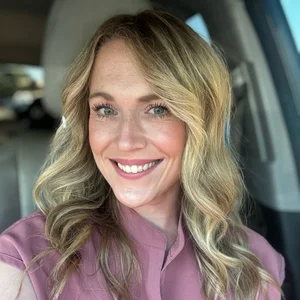
Ashley Flurry, RT(R)(M)
Founder, Breast Imaging Matters